Salwar Kameez Suits Guide: Every Style, Pakistani vs Punjabi Cuts, and How to Style Them
Few outfits carry the weight of tradition and the ease of everyday wear quite like the salwar kameez. It has been the go-to silhouette for South Asian women for generations, and it hasn’t slowed down — if anything, 2026’s festive and wedding season is seeing more experimentation with cuts, fabrics, and regional styles than ever before.
But “salwar kameez” isn’t one outfit. It’s an entire family of styles — Anarkali, Sharara, Patiala, jacket-style, lawn — each with its own silhouette, occasion, and regional identity. And one question comes up constantly: what’s the actual difference between a Pakistani salwar suit and a Punjabi suit?
This guide breaks down every major salwar kameez style, settles the Pakistani-vs-Punjabi debate once and for all, and — because the right outfit is only half the look — shows you exactly how to complete each style with the correct footwear.
What Is a Salwar Kameez, Exactly?
A salwar kameez is a two-piece ensemble consisting of a kameez (a tunic or top, ranging from knee-length to floor-length) and a salwar (loose-fitting trousers, though the term today covers everything from churidars to palazzos). Most versions are completed with a dupatta — a long scarf draped over the shoulders or head.
Originating in South Asia, the salwar kameez has stayed relevant for one simple reason: it adapts. Change the fabric and it goes from a breezy daily-wear outfit to a heavily embellished bridal ensemble. Change the cut of the bottom and it goes from festival-ready to boardroom-appropriate. That adaptability is exactly why understanding the different styles matters before you buy.
The Main Types of Salwar Kameez Suits
1. Lawn Suits
Lawn suits use a lightweight, finely woven cotton fabric that originated in Pakistan and has since become a summer wardrobe staple across South Asia. They typically pair a straight-cut kameez with a churidar or straight-leg bottom, finished with digital prints, thread work, or delicate zari and sequin detailing. Because the fabric breathes so well, lawn suits are the first choice for daytime events, casual outings, and hot-weather dressing.
2. Traditional Salwar Kameez Suits
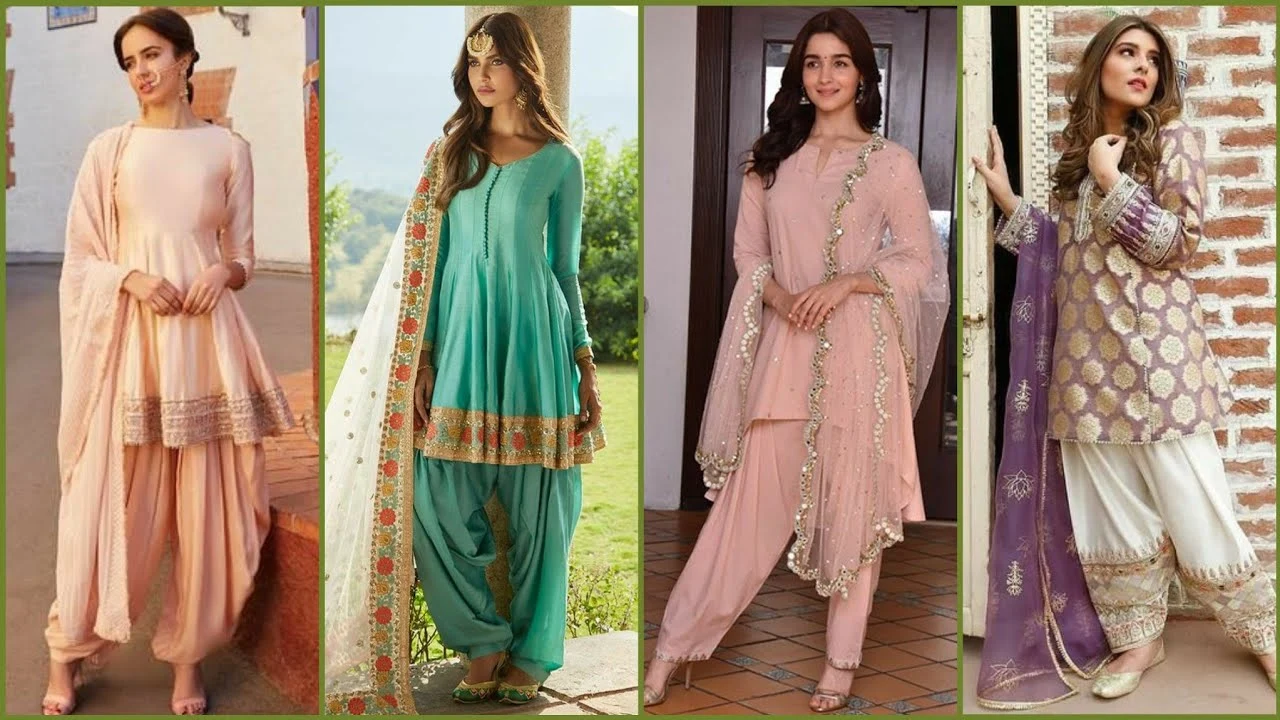
This is the classic silhouette most people picture: a straight or slightly A-line kameez in cotton or georgette, paired with a loose, pleated salwar that narrows at the ankle. Embroidery ranges from minimal thread work for daily wear to dense hand-embellishment for festive occasions. Soft pastels dominate summer collections, while jewel tones take over for winter and wedding season.
3. Sharara and Palazzo Suits
Both styles swap the fitted salwar for wide, flowing pants — sharara sets are flared from the knee down (often in two or three panels), while palazzo suits flow wide from the waist. Both create an elongating, statement-making silhouette that photographs beautifully, which is exactly why they’ve become the default choice for sangeet nights, receptions, and festive parties.
4. Jacket-Style Suits
A more contemporary addition, jacket-style suits layer an embellished, often floor-length jacket over a fitted kameez or camisole. The jacket itself becomes the statement piece — heavily embroidered, sometimes with contrast linings — and many designs skip the dupatta entirely, letting the jacket do the visual work. This style has become especially popular for cocktail functions and modern, fusion-leaning weddings.
5. Anarkali Suits
Named after the legendary Mughal-era courtesan, the Anarkali is instantly recognizable: a fitted bodice that flares dramatically from the waist into a floor-sweeping hem, worn over a churidar. It’s the most universally flattering salwar kameez style — the flare skims the body rather than clinging to it — which is why it remains a top choice for weddings, receptions, and formal events across both Pakistani and Indian design houses.
6. Patiala Suits
No guide to salwar suits is complete without the Patiala. Originating in Punjab, the Patiala salwar is cut with extra fabric and pleated at the waist so it falls in loose, rope-like folds — traditionally paired with a shorter, fitted kameez. It’s the single most distinctive marker of a Punjabi suit (more on that below) and remains a favorite for daytime festivities, Punjabi weddings, and giddha performances specifically because it moves so well with dance.
Pakistani Salwar Suit vs Punjabi Suit: What’s the Real Difference?
This is one of the most-searched comparisons in ethnic wear, and for good reason — the two styles are often confused despite having distinct identities.
| Pakistani Salwar Suit | Punjabi Suit | |
|---|---|---|
| Kameez length | Longer, often knee-length or below | Shorter, typically hip to mid-thigh |
| Bottom | Churidar, straight pants, sharara, or palazzo | Patiala salwar (pleated, voluminous) |
| Fabric | Chiffon, silk, georgette, lawn | Cotton, silk, and festive fabrics with bold prints |
| Embellishment | Elaborate embroidery, delicate threadwork, mirror work | Bright colors, phulkari embroidery, contrast borders |
| Best suited for | Formal events, receptions, evening wear | Daytime functions, casual festivity, dance-heavy events |
| Overall vibe | Elegant, flowing, statement-making | Vibrant, playful, rooted in Punjabi folk tradition |
In short: if the silhouette is long, flowy, and dramatic, it’s leaning Pakistani. If it’s colorful, pleated, and made for movement, it’s Punjabi. Neither is “better” — they’re suited to different moods and occasions, and plenty of modern designers now blend elements of both (a Patiala salwar under a longer Pakistani-style kameez, for instance).
Choosing the Right Fabric for the Occasion
- Summer / daytime: Lawn, cotton, or chiffon — breathable and light, ideal for lengthy outdoor functions.
- Winter / evening: Velvet, silk, and raw silk hold structure and richness well under evening lighting.
- Weddings / receptions: Georgette and silk blends take embellishment — zari, sequins, mirror work, and dabka — without losing drape.
- Everyday wear: Simple cotton or cotton-blend suits with minimal embroidery for comfort through long work days.
How to Style a Salwar Kameez for Party Wear
Getting the outfit right is step one. Getting the finished look right is what actually turns heads — and that comes down to three details people underestimate: dupatta draping, accessories, and footwear.
- Dupatta draping: For Anarkali and jacket-style suits, drape the dupatta over one shoulder and let it fall long at the back for a more formal, elongated look. For Patiala and traditional suits, a symmetrical front drape over both shoulders keeps things classic and comfortable for movement.
- Accessories: Let the outfit lead. Heavily embellished Anarkali and sharara suits pair best with statement earrings and a minimal neckline; simpler lawn and cotton suits can carry layered jewelry without looking overdone.
- Footwear — the detail most people get wrong: A stunning suit can still fall flat if the footwear doesn’t match the silhouette’s mood. This is where most styling guides stop short — so here’s a breakdown by suit style.
Complete the Look: Which Jutti Style Suits Which Salwar Suit
Traditional Punjabi juttis remain the most versatile footwear pairing for salwar kameez across every style — but the right jutti depends on the cut you’re wearing.
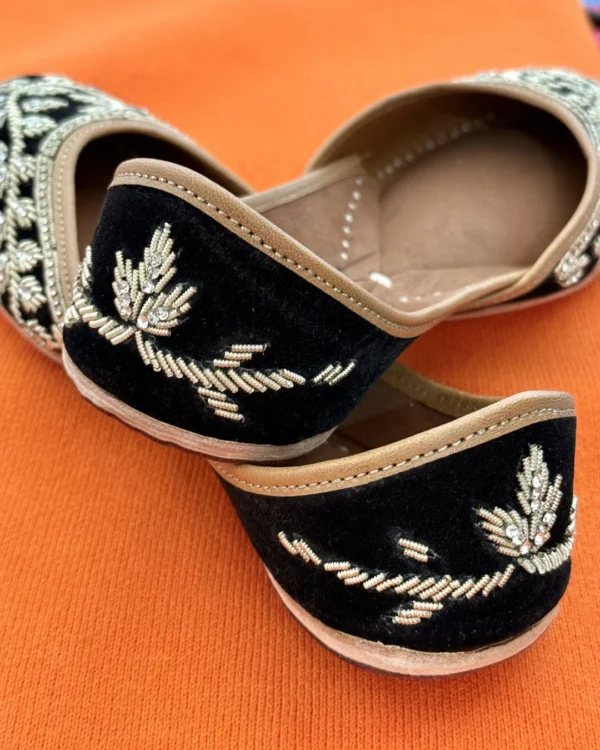
- Anarkali or jacket-style suits: Go with an embellished, closed-toe jutti in gold zari or dabka work — the flare of the outfit calls for footwear with equal richness. A heeled jutti also helps balance the floor-sweeping hem.
- Sharara or palazzo suits: Since the pants already create volume, a sleeker, low-profile jutti (or a jutti-heel hybrid) keeps the silhouette from looking bottom-heavy while still peeking out elegantly with each step.
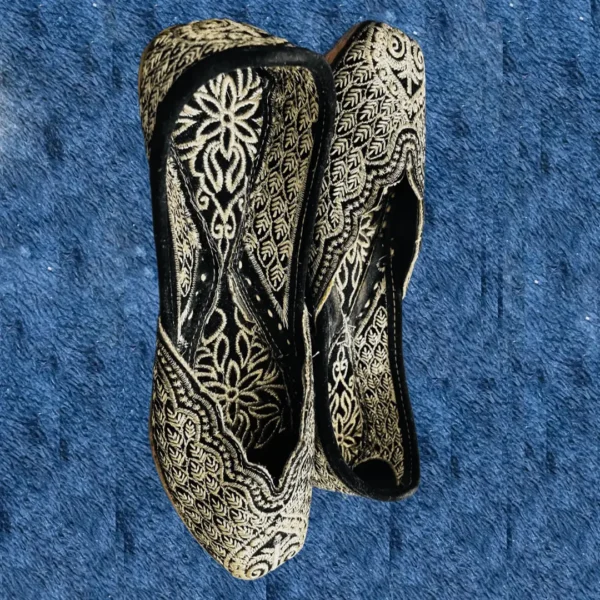
- Patiala / Punjabi suits: This is the jutti’s home turf. A classic leather jutti with mirror work or bold floral embroidery is the traditional, correct pairing — it’s practically designed for this outfit, and it holds up beautifully through hours of dancing.
- Lawn or everyday cotton suits: A loafer jutti or sneaker jutti keeps things comfortable and casual without sacrificing the ethnic touch — ideal for daytime errands, office-appropriate ethnic days, or festival visits that involve a lot of walking.
Explore the full range in FrillThrills’ handcrafted Punjabi jutti collection — every style above, from bridal embellished pairs to everyday loafer juttis, is handmade with authentic zari, aari, and mirror work.
For a deeper dive into pairing juttis with your outfit, see our related guide: How to Style Punjabi Jutti for Ladies with Any Outfit.
Beyond Pakistani and Punjabi: Other Regional Salwar Styles Worth Knowing
While Pakistani and Punjabi cuts dominate the conversation, a few other regional variations are worth knowing if you’re building out a well-rounded ethnic wardrobe:
- Sindhi suits: Known for dense mirror work and vibrant, often multi-color embroidery across the yoke and sleeves — a strong choice if you want a suit that stands out without relying on sequins.
- Kashmiri suits: Feature signature aari and crewel embroidery, usually in richer, jewel-toned fabrics like pashmina or wool blends — ideal for winter functions.
- Rajasthani/Gota Patti suits: Recognizable by gold and silver gota ribbon work applied in floral or geometric patterns, commonly seen at Rajasthani weddings and Teej celebrations.
None of these require different footwear logic than the five core styles above — the same jutti-matching principles apply based on how formal or voluminous the outfit is.
How to Care for an Embroidered Salwar Suit
Heavily embellished suits need a bit more care than everyday cotton wear:
- Dry clean first, wash later: Get zari, dabka, and mirror-work suits dry-cleaned for at least the first wear — hand-washing can pull threads before you know how the embellishment settles.
- Store folded, not hung: Heavy embroidery can stretch out of shape on a hanger over time. Fold gently with tissue paper between layers of embellishment to prevent snagging.
- Iron from the inside: Always iron embroidered sections from the reverse side, on a low setting, with a thin cloth as a barrier.
- Air out juttis after wear: The same care logic applies to your footwear — let embellished juttis air out and store them in a breathable pouch rather than a sealed box, especially after long wear at outdoor functions.
Buying Tips: How to Choose the Right Salwar Suit for You
- Match the silhouette to your body type. Anarkali suits flatter almost every body type thanks to their fit-and-flare cut. Straight-cut traditional suits suit taller frames, while sharara and palazzo styles balance broader hips beautifully.
- Buy the fabric for the season, not just the event. A gorgeous velvet suit will feel unbearable at a daytime summer wedding — always cross-check fabric weight against the season and venue (indoor/outdoor).
- Check the embroidery placement, not just the amount. Suits with embellishment concentrated at the neckline and hem tend to look more expensive and drape better than suits with embroidery scattered throughout.
- Don’t buy the outfit and forget the footwear. As covered above, the wrong shoe silhouette can undercut an otherwise perfect outfit — plan the jutti or heel alongside the suit, not as an afterthought.
- Factor in dupatta quality. A well-draped, good-quality dupatta fabric can elevate even a simple suit; a cheap, stiff dupatta can flatten an expensive one.
Frequently Asked Questions
What is the difference between a salwar suit and a Punjabi suit? “Salwar suit” is the umbrella term for the entire two-piece (or three-piece) outfit. A “Punjabi suit” refers specifically to the regional style featuring a shorter kameez and a pleated Patiala salwar, rooted in Punjab’s design traditions.
Which salwar kameez style is best for a wedding? Anarkali and sharara suits are the most popular choices for weddings and receptions thanks to their dramatic, floor-length silhouettes and ability to carry heavy embellishment well.
What footwear goes best with a salwar kameez? Traditional Punjabi juttis are the most versatile pairing across nearly every salwar kameez style. Match the jutti’s formality to the suit’s — embellished juttis for Anarkali and party wear, simpler loafer or sneaker juttis for everyday cotton and lawn suits.
Are Pakistani suits and Indian salwar kameez the same thing? They’re closely related but not identical. Pakistani suits tend to feature longer kameez lengths, more fluid silhouettes, and fabrics like chiffon and lawn, while Indian salwar kameez spans a wider range of regional styles, including the shorter, pleated Punjabi suit.
What fabric is best for summer salwar suits? Lawn and cotton are the best choices for summer — both are breathable, lightweight, and hold prints and light embroidery well without feeling heavy in the heat.
Can I wear heels instead of juttis with a salwar suit? Yes — block heels and heeled juttis both work well with Anarkali, sharara, and jacket-style suits, especially for formal evening events. For Patiala and everyday cotton suits, a flat or low-heeled jutti stays truer to the outfit’s traditional, comfort-first character.
-
 40%
OFF
40%
OFF
Juttis for Women
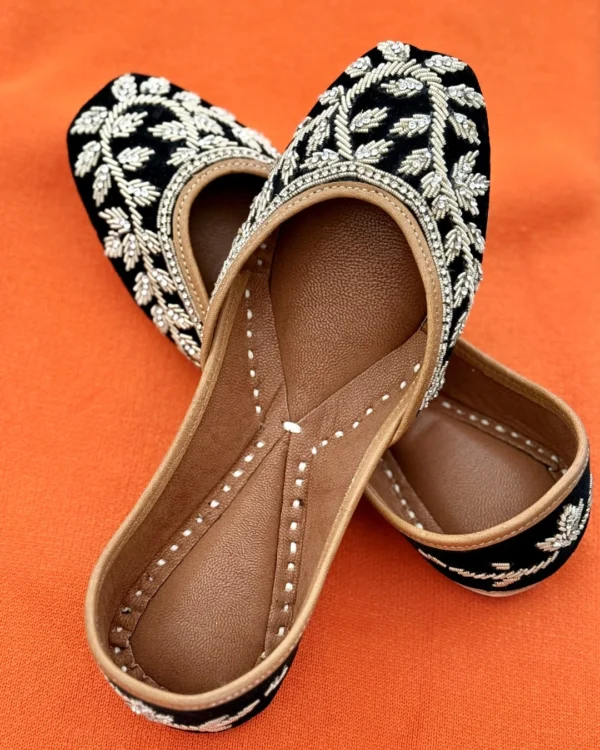
Black Dabka Work Jutti
Original price was: ₹1,499.00.₹899.00Current price is: ₹899.00.Select size
-
 40%
OFF
40%
OFF
Juttis for Women
Black Multi Floral Jutti
Original price was: ₹1,499.00.₹899.00Current price is: ₹899.00.Select size
-
 57%
OFF
57%
OFF
Juttis for Women
Black Punjabi Juttis & Mojaris
Original price was: ₹930.00.₹399.00Current price is: ₹399.00.Select size
-
Select size